
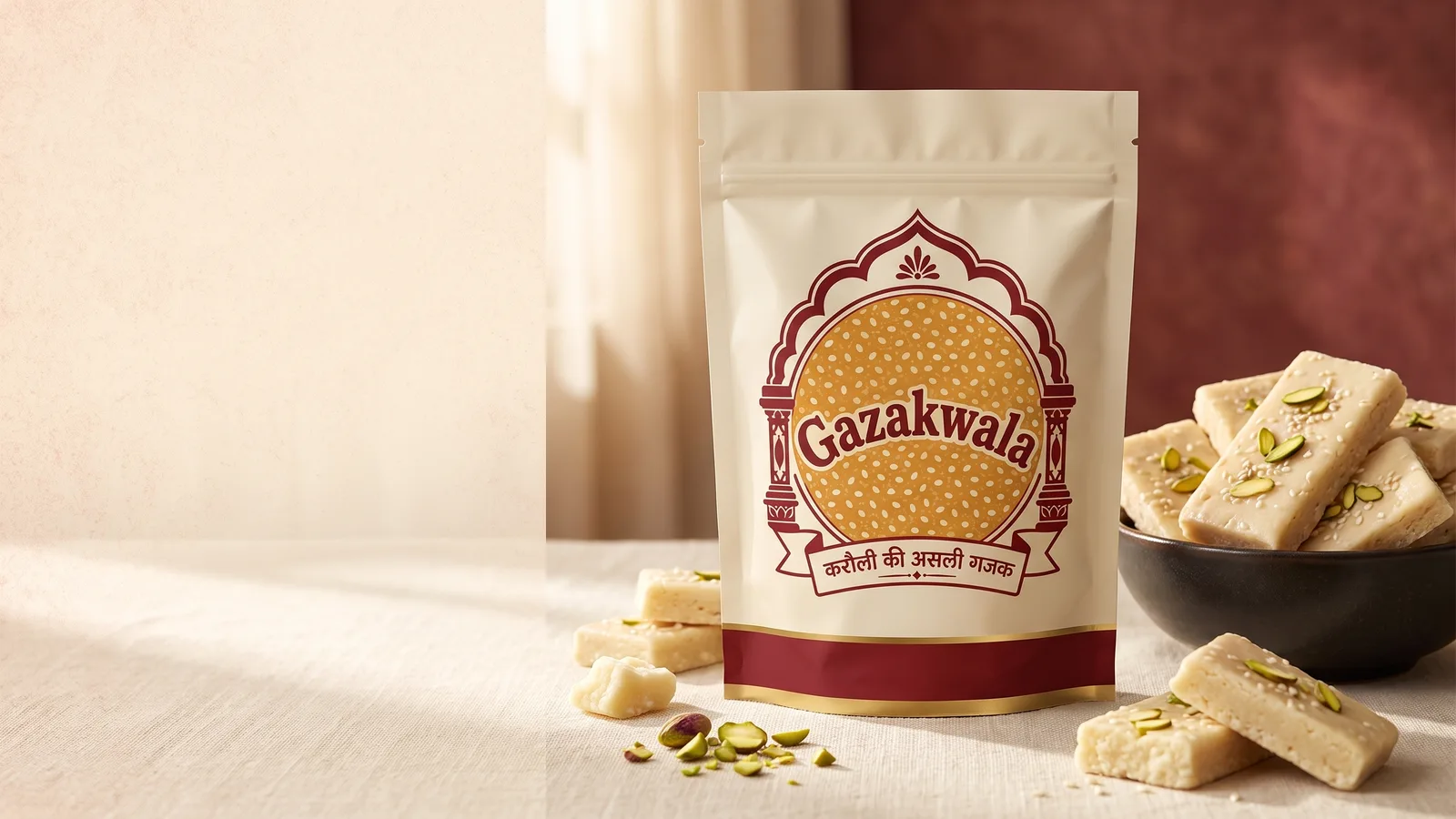
Every other chikki is built to snap. Malai chikki is built to melt. Here is the milk-and-mawa sweet that breaks the rule the whole category is named for.
What Is Malai Chikki?
Malai chikki is a soft, milky variety of chikki made from reduced milk solids — mawa or khoya, sometimes with a spoon of cream folded in — instead of the hard nut-and-jaggery brittle most people picture. The name says it literally: malai means cream, so malai chikki is cream chikki, and the dairy is the point rather than the nut.
It is closely related to what is sold as mawa chikki or milk chikki, and in several regions the same soft slab turns up under the name butter chikki. Where peanut or til chikki is amber, glassy and loud when you break it, malai chikki is pale, fudgy and quiet. It gives way under the teeth and melts on the tongue.
This is a winter and festive sweet, most visible around Sankranti, Diwali and wedding-season sweet trays in Rajasthan, Madhya Pradesh and Uttar Pradesh. If you want a fair mental model: it eats like a cross between a chikki and a pedha or barfi — the shape and the tray-set squares come from chikki, the texture and the dairy sweetness come from the mawa side of the sweet shop.
Malai, Mawa and Butter Chikki — Are They the Same?
Mostly, yes — and the confusion is worth untangling once. Mawa chikki, or khoya chikki, is named after its base: milk reduced down to solids is the defining ingredient, and everything else is seasoning. Malai chikki sits in the same family, usually with extra cream or a heavier hand with ghee for richness, and in practice most makers use the two names interchangeably for the same tray.
Butter chikki is the loosest of the three. Sometimes it describes a soft style where butter or ghee richness leads the flavour; sometimes it is simply the local shop name for the same soft milky chikki, chosen because "butter" reads as rich to a customer. It is not a separate technique.
The honest bottom line: these are one soft-chikki family with regional and recipe-driven name differences, not three distinct sweets. If a shop tells you their mawa chikki and malai chikki are two different products, ask what changed — usually it is the amount of cream, the nut on top, or nothing at all.
| Name | Defining ingredient | Texture | Also called |
|---|---|---|---|
| Malai Chikki | Mawa/khoya plus added cream or extra ghee | Soft, rich, fudgy; melts | Cream chikki, mawa chikki |
| Mawa Chikki | Reduced milk solids (mawa/khoya) | Soft, dense, tender set | Khoya chikki, milk chikki |
| Butter Chikki | Same milky base, butter/ghee richness leading | Soft to semi-firm, buttery | Regional name for soft milky chikki |
Why It Melts Instead of Snapping
A crisp chikki snaps because its jaggery or sugar syrup is cooked to the hard-crack stage, roughly 149–154°C. At that point almost all the water has gone and the sugar sets into a glassy sheet around the nuts. That glass is the snap.
Malai chikki deliberately stops far short of it. The mawa and sugar are cooked to a much softer set — soft-ball, fudge territory — so the finished slab holds its shape but stays tender. There is more moisture left in the piece and no glassy sugar sheet to shatter.
The dairy does the rest. Milk fat and milk solids physically interrupt sugar crystallisation, keeping the crystals small and the mouthfeel smooth rather than gritty or brittle. That is where the melt comes from. The same milk content that makes it rich and soft is also what makes it shorter-lived than a nut brittle — an unavoidable trade, not a defect.
How Malai Chikki Is Made
Nothing here is exotic; it is patience work. Anyone who has made barfi at home will recognise the rhythm, and the one rule that decides whether it comes out well is heat control.
- Reduce full-fat milk slowly, stirring, until it thickens into mawa or khoya — or start from good ready khoya if you are not up for the reduction.
- Cook the mawa gently with sugar and a little ghee until it thickens into a soft, glossy, fudge-like mass that pulls away from the pan.
- Flavour with freshly crushed green cardamom, and saffron if you want the warmer, festive note.
- Fold in chopped pistachios or almonds while the mass is still warm and workable.
- Spread onto a greased tray, level the surface with a flat spatula or a greased katori base.
- Scatter more slivered pistachio on top and press it in lightly so it stays put.
- Let it cool until set but not cold, then cut into squares or bars with a clean, lightly greased knife.
Taste, Texture and How to Serve It
Expect a pale cream to ivory colour, sometimes with a faint golden cast where the mawa caught a little colour in the pan. The bite is soft and fudgy with a slight grain from the milk solids, the sweetness is round and dairy-forward rather than sharp, and cardamom with a little saffron carries the aroma. Pistachio on top gives the only crunch in the piece.
Serve it fresh and at room temperature — that is when the fat is soft and the melt actually happens. A short chill firms the slab for cleaner cutting, which is useful, but do not serve it straight from the fridge; cold mawa eats waxy and mutes the cardamom entirely.
On a festive thali it earns its place through contrast. Put it next to crisp gajak and thin tilpatti and the plate suddenly has two textures instead of one — something to shatter and something to melt.
Shelf Life and Storage — Read This Before You Buy
This is the practical point that matters most, so plainly: malai and mawa chikki are dairy sweets and they are perishable in a way jaggery chikki simply is not. A nut brittle has almost no free water and keeps for weeks in a sealed tin. A milk-solids slab does not.
Kept at room temperature, expect a few days at good quality. Kept refrigerated in a genuinely airtight box, roughly a week to ten days. Treat its shelf life the way you would treat pedha or barfi from a good sweet shop, because that is the category it actually belongs to. Traditional makers add no preservatives, which is exactly why the window is short.
That has real consequences for buying. Long-distance shipping of soft mawa pieces is a timing problem, not just a packing problem, so buy fresh and buy local where you can, ask when the batch was made, and keep it cold if you are holding it more than a day or two. If you need a sweet that travels across the country and sits in an office drawer for a fortnight, this is the wrong one — pick the crisp chikki.
Malai Chikki vs Crisp Chikki — Which to Choose
Choose crisp peanut, til or kaju chikki when shelf life, travel and everyday snacking matter. It packs hard, survives couriers and heat, portions cleanly, and delivers the clean snap the category is named for. It is also the better gifting default simply because it keeps.
Choose malai or mawa chikki when you want an indulgent, dessert-like festive sweet to be eaten within days — a mithai-box piece rather than a pocket snack. Richer, softer, more special, and gone sooner.
Neither is better. They do different jobs, and a good festive tray usually has both. If you want the full landscape of types, the complete chikki guide at /chikki compares every variety side by side, and /gazak-varieties shows where the soft mawa-style pieces sit against the crisp gazak range.
Buy Creamy Mawa Sweets from Karauli
Gazakwala makes traditional sweets near Karauli, Rajasthan under FSSAI Lic. No. 12224038000012, and ships pan-India. Our range is built around crisp gazak, tilpatti and chikki, with soft mawa-and-cream style pieces made alongside them in the sweet season.
Because soft mawa sweets are made to short shelf life, we do not keep a fixed year-round malai chikki listing. The practical route is to message us on WhatsApp and ask which soft mawa or malai pieces are in production right now, and we will tell you honestly what is available and how fresh it is — including whether it makes sense to ship to your city at all.
If you need something that travels, start with the crisp range at /gazak-varieties instead. Same kitchen, same jaggery and sesame sourcing, far more forgiving in transit.
Frequently asked
- What is malai chikki?
- Malai chikki is a soft, milky chikki made with mawa or khoya and sometimes added cream. It is pale and fudgy rather than glassy, and it melts on the tongue instead of snapping. It is also sold as mawa chikki or milk chikki.
- Is mawa chikki the same as malai chikki?
- Essentially yes. Mawa or khoya is the defining base in both, and malai chikki is the same family with cream or extra ghee for richness. Most makers use the two names interchangeably for the same sweet.
- Why is malai chikki soft and not crisp?
- Because it is cooked to a softer sugar set — fudge stage rather than the hard-crack stage a brittle needs — and because milk fat and milk solids interrupt sugar crystallisation. Together that keeps the piece tender and smooth instead of glassy.
- How long does malai chikki last?
- Only a few days at room temperature, and roughly a week to ten days refrigerated in an airtight box, because it is a dairy sweet. That is far shorter than nut chikki, so buy it fresh and eat it soon.
संक्षेप में (हिंदी)
मलाई चिक्की मावे और मलाई से बनी मुलायम चिक्की है, जो कुरकुराने के बजाय मुँह में घुलती है। रंग हल्का क्रीमी, स्वाद दूध जैसा गाढ़ा, और ऊपर पिस्ता — बनावट में यह चिक्की और पेड़ा/बर्फी के बीच की चीज़ है।
मलाई चिक्की, मावा चिक्की और बटर चिक्की — ये लगभग एक ही परिवार के नाम हैं। फ़र्क़ ज़्यादातर मलाई या घी की मात्रा और इलाक़े के नाम का है, तीन अलग मिठाइयाँ नहीं हैं।
दूध से बनी होने के कारण यह जल्दी खराब होती है — कमरे के तापमान पर कुछ ही दिन, और फ्रिज में बंद डिब्बे में करीब हफ़्ता–दस दिन। इसलिए इसे ताज़ा ही खरीदें; लंबी दूरी के लिए कुरकुरी चिक्की या गजक बेहतर है।
Read next
करौली की असली गजक — सीधे आपके घर तक
Order our winter batch on WhatsApp. Small-batch, no palm oil, no preservatives.
Order on WhatsApp