Chikki Guide
Peanut Chikki — Groundnut Chikki, Benefits, Calories & Where to Buy
मूंगफली चिक्की
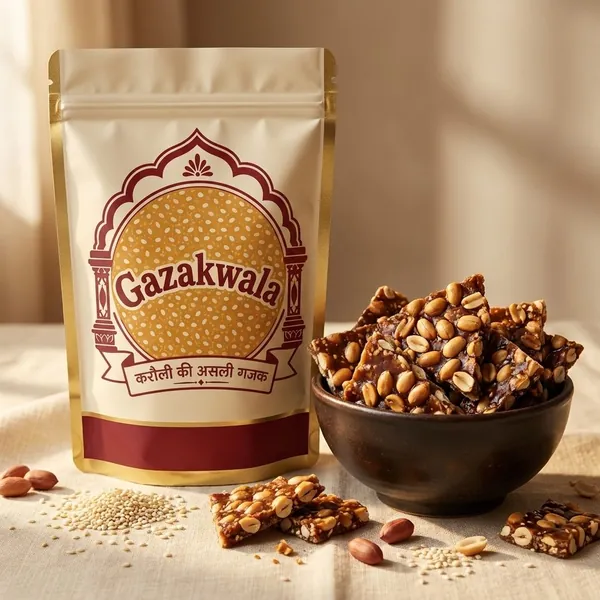
The everyday classic — whole roasted groundnuts set into dark jaggery and rolled into rustic, hand-broken shards.
What Is Peanut Chikki?
Peanut chikki — sold across India as groundnut chikki, shengdana chikki, palli patti and mungfali chikki — is the most widely eaten brittle in the country: whole roasted groundnuts set into molten jaggery, rolled thin and cut into bars.
It is the chikki most people meet first, sold at railway platforms, temple stalls and winter markets, because groundnuts are cheap, filling and travel well. In the sesame belt around Karauli it sits beside gazak on the same tray through January.
How Peanut Chikki Is Made
The groundnuts are dry-roasted in small lots until the kernels split easily, then cooled and rubbed between cloth so the papery skins come away — skipping this step is the single most common reason homemade peanut chikki turns bitter.
The jaggery is cooked to hard-crack stage, the nuts are folded in off the flame, and the mass is tipped onto a greased stone slab and rolled thin. Ours is broken into rustic hand-cut shards rather than machine-cut squares.
Taste and Texture
Deep roasted-peanut flavour against dark caramel jaggery, with a firm snap that gives way to a crumbly, nutty chew. Less delicate than til chikki, more filling than any other variety, and the least sweet-tasting of the range because the groundnuts balance the gur.
Benefits of Peanut Chikki
Groundnuts are one of the most affordable sources of plant protein and healthy fats in Indian kitchens, and setting them in gur rather than refined sugar keeps the iron and trace minerals jaggery is valued for. Two ingredients, no maida, no preservatives — which is why it has served as a working person's travel snack for generations.
This is general food information, not dietary or medical advice — anyone managing blood sugar or a specific health condition should speak to a qualified professional, because chikki is calorie-dense and jaggery is still a sugar.
Calories in Peanut Chikki
Peanut chikki runs approximately ~450–480 kcal/100g, driven mostly by the oil content of the groundnuts — so a single 20 g bar is around 90–95 kcal.
These are typical indicative ranges for traditionally made chikki and are provided for general guidance. Actual values vary with recipe, jaggery grade and nut ratio — always check the nutrition panel on the pack you buy.
How to Store
Keep it in an airtight tin away from steam and sunlight; peanut chikki holds 3 to 6 months this way. Groundnut oil picks up smells easily, so store it away from spices, and never seal the container before the bars are completely cold.
Buy Peanut Chikki Online
We make peanut chikki in small winter batches near Karauli, Rajasthan with pure jaggery and no palm oil, under FSSAI Lic. No. 12224038000012, and ship pan-India. Message us for current pack sizes, gift boxes or bulk quantities.
Order Peanut Chikki on WhatsAppMore on Peanut Chikki
Want to make it yourself? Our peanut chikki recipe covers the exact ratios, the hard-crack temperature and the five ways a batch fails.
For the numbers, see our chikki calories and nutrition breakdown comparing peanut, til, kaju, badam and dry fruit chikki per piece.
Peanut Chikki — Frequently Asked Questions
Is peanut chikki the same as shengdana chikki?+
Yes. Shengdana chikki is the Marathi name, palli patti is used in Andhra and Telangana, and mungfali or groundnut chikki is the same sweet in the north — all describe roasted peanuts set in jaggery.
Why does peanut chikki sometimes taste bitter?+
Almost always because the papery peanut skins were not rubbed off after roasting, or the nuts were over-roasted. Well-made chikki uses clean, evenly roasted kernels.
How many calories are in peanut chikki?+
Roughly 450–480 kcal per 100 g for traditionally made jaggery peanut chikki. Values shift with the peanut-to-jaggery ratio.
Can peanut chikki be made with sugar instead of jaggery?+
It can, and sugar versions look paler and glassier, but jaggery peanut chikki has the deeper caramel flavour and the mineral content that gur brings. We set ours in pure jaggery.
Related Chikki Varieties
 Til Chikkiतिल चिक्की
 Kaju Chikkiकाजू चिक्की
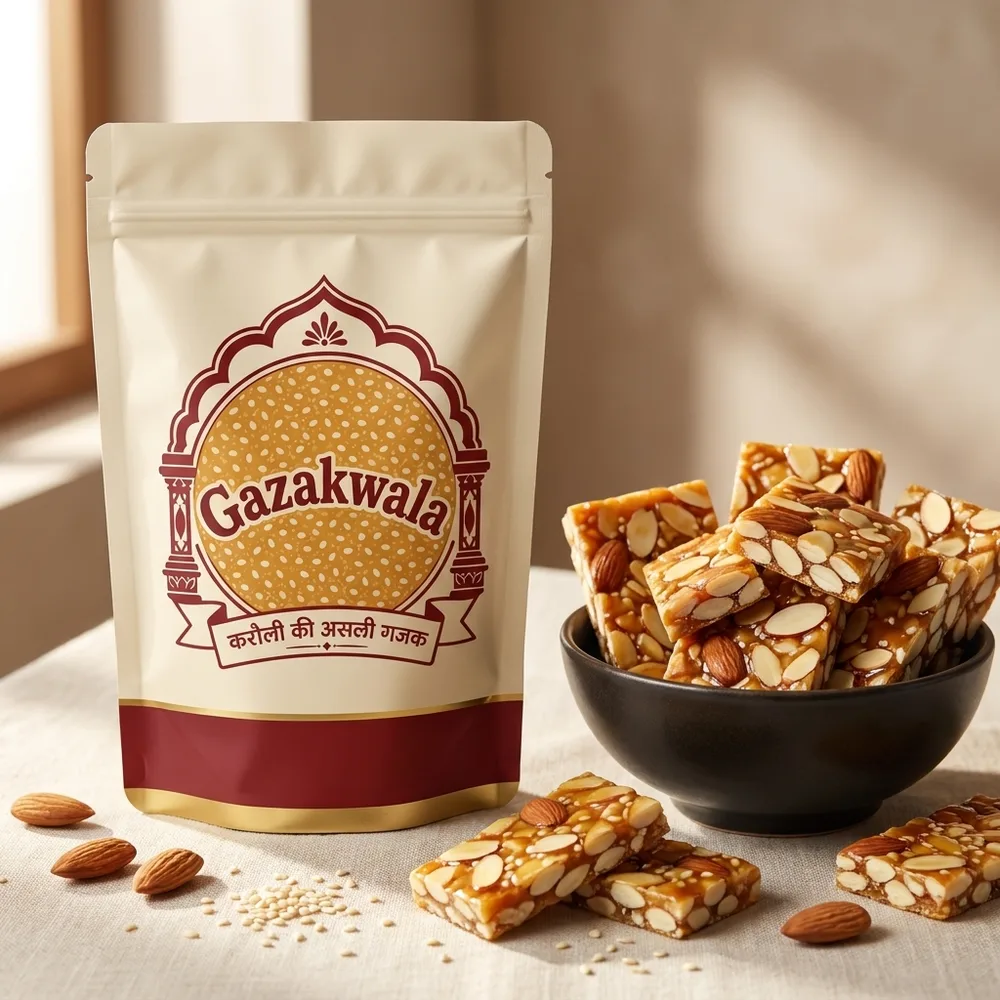 Badam Chikkiबादाम चिक्की
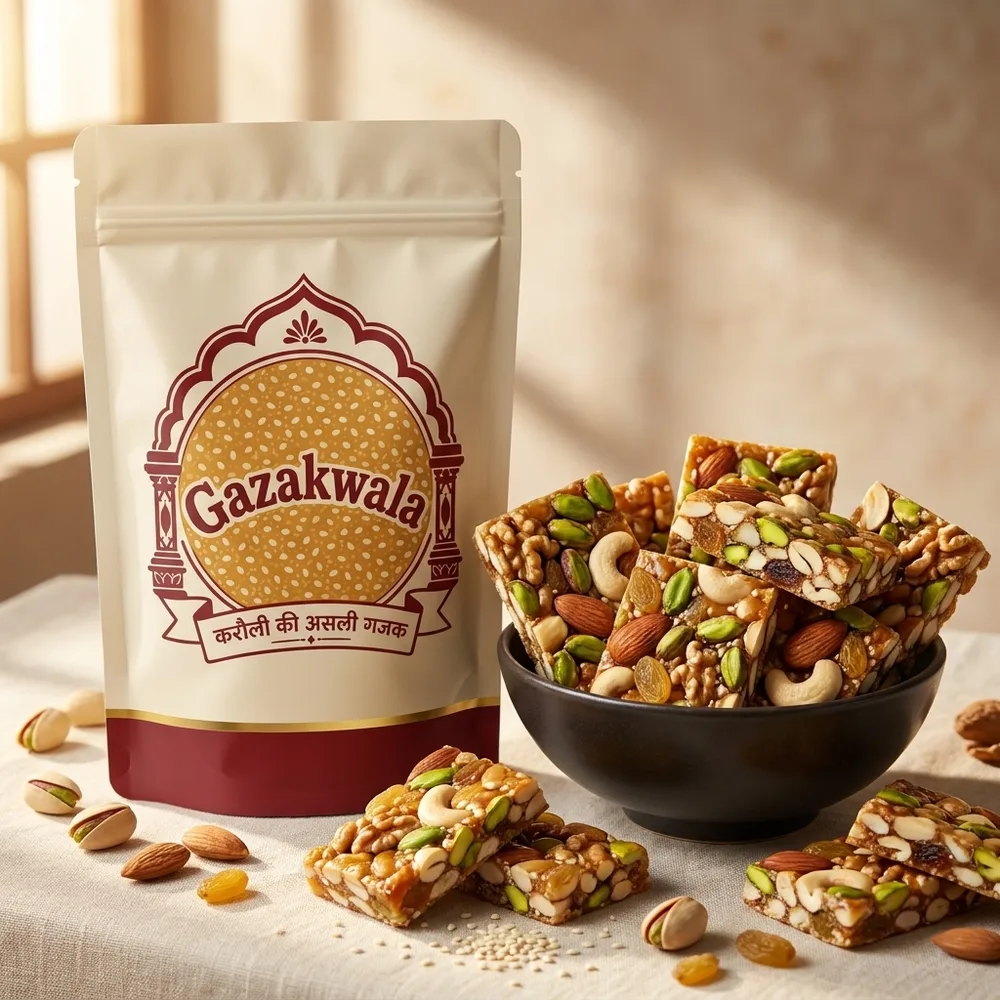 Dry Fruit Chikkiड्राई फ्रूट चिक्की
Back to the full guide: Chikki — types, benefits and calories.