
Complete Guide
Chikki — Types, Benefits and India's Original Energy Bar
चिक्की — गुड़ और मेवे की पारंपरिक मिठाई
Every type of chikki explained — peanut, til, kaju, badam, dry fruit and gud — with calories, how it is made, and how to tell it apart from gajak and tilpatti.
What Is Chikki?
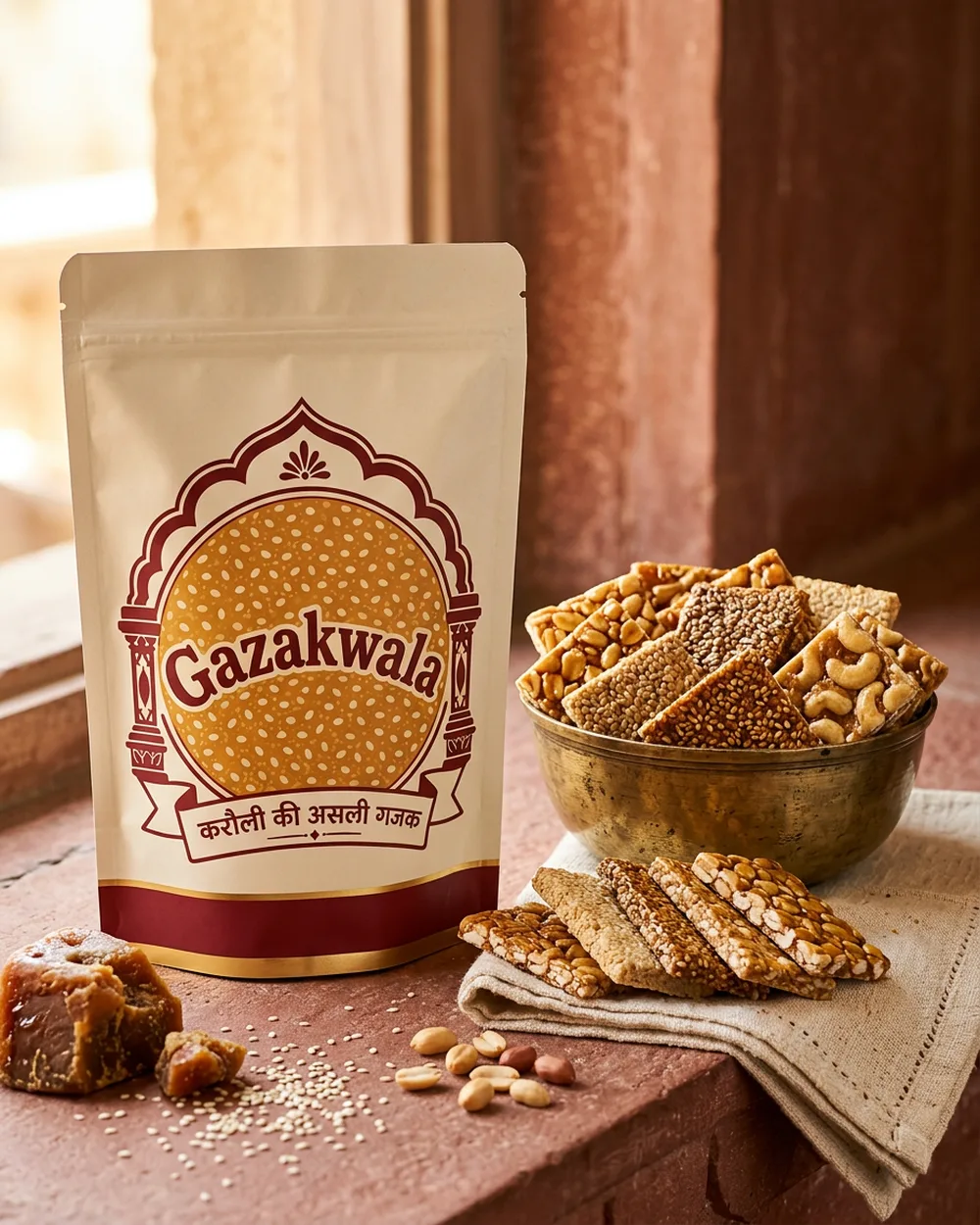
Chikki is a traditional Indian brittle made by setting roasted nuts or seeds into molten jaggery or sugar syrup, then rolling it thin and cutting it into bars while still warm. It is one of the oldest travel foods in the subcontinent — shelf-stable without refrigeration, dense in energy, and made from two ingredients that keep for months.
In English, chikki is usually translated as jaggery brittle or nut brittle; peanut brittle is its closest Western cousin, though chikki is traditionally set in gur rather than refined sugar. Across India it carries different names for the same idea: shengdana chikki in Maharashtra, palli patti in Andhra and Telangana, gud patti across the northern plains, and in Rajasthan and Madhya Pradesh it sits in the same family as gajak and tilpatti.
Chikki is eaten year-round, but it peaks around Makar Sankranti and Lohri in January, when jaggery and sesame are traditionally eaten to carry the body through winter. That is also when the sesame belt around Karauli is busiest — the season when the new crop of til and fresh gur reach the karigars.
Types of Chikki
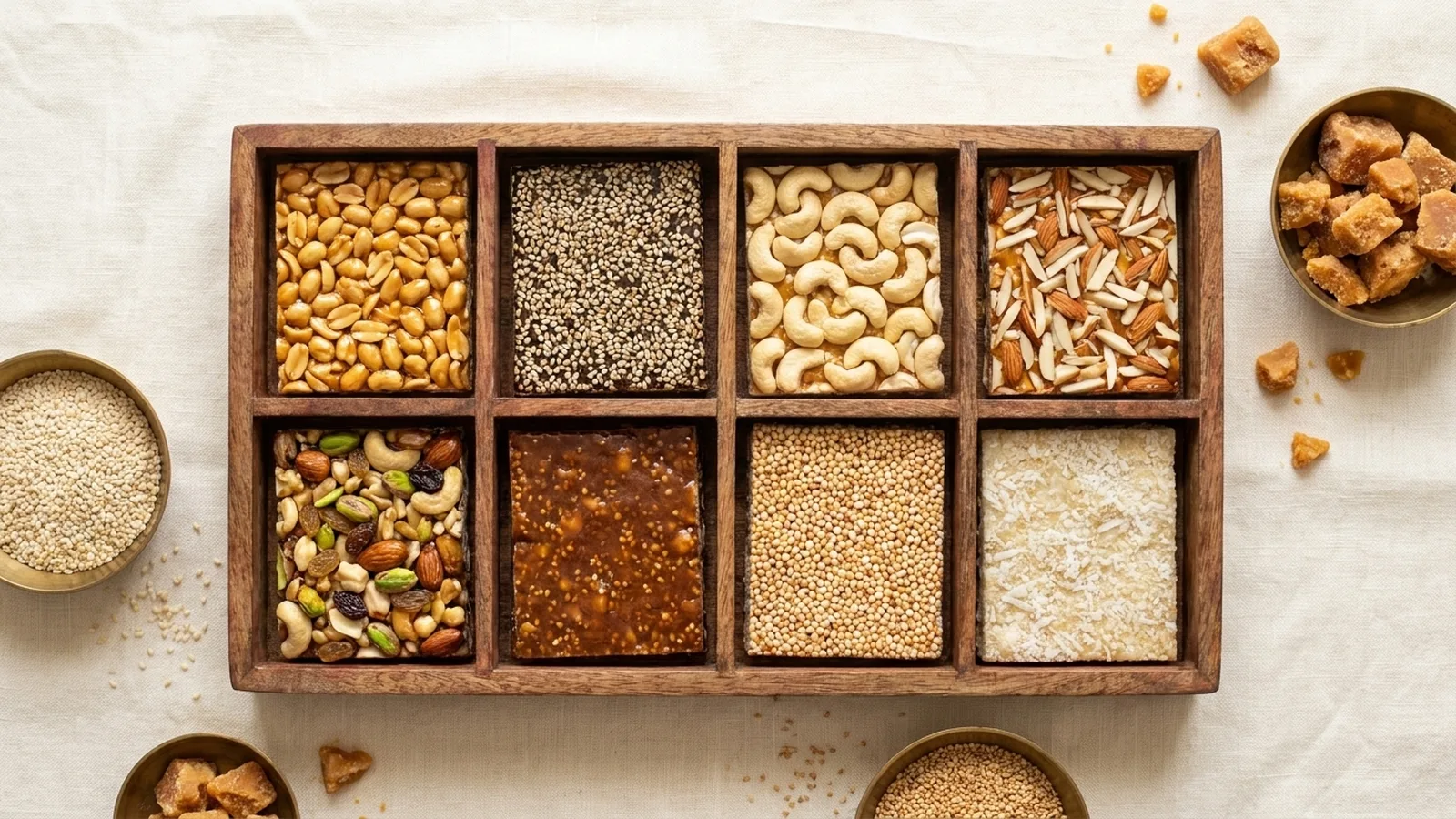
Chikki is defined by what is set into the syrup, and by whether that syrup is jaggery or sugar.
Peanut Chikki
मूंगफली चिक्की
Also called: Groundnut Chikki, Shengdana Chikki, Palli Patti, Mungfali Chikki
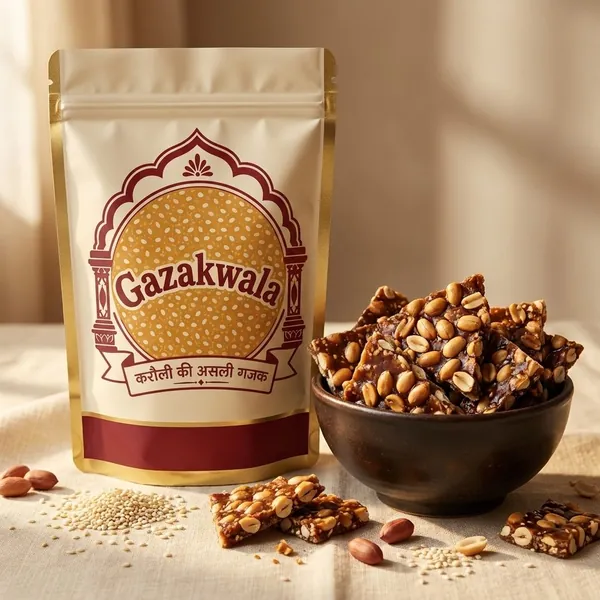
The everyday classic — whole roasted groundnuts set into dark jaggery and rolled into rustic, hand-broken shards.
Read the Peanut Chikki guide →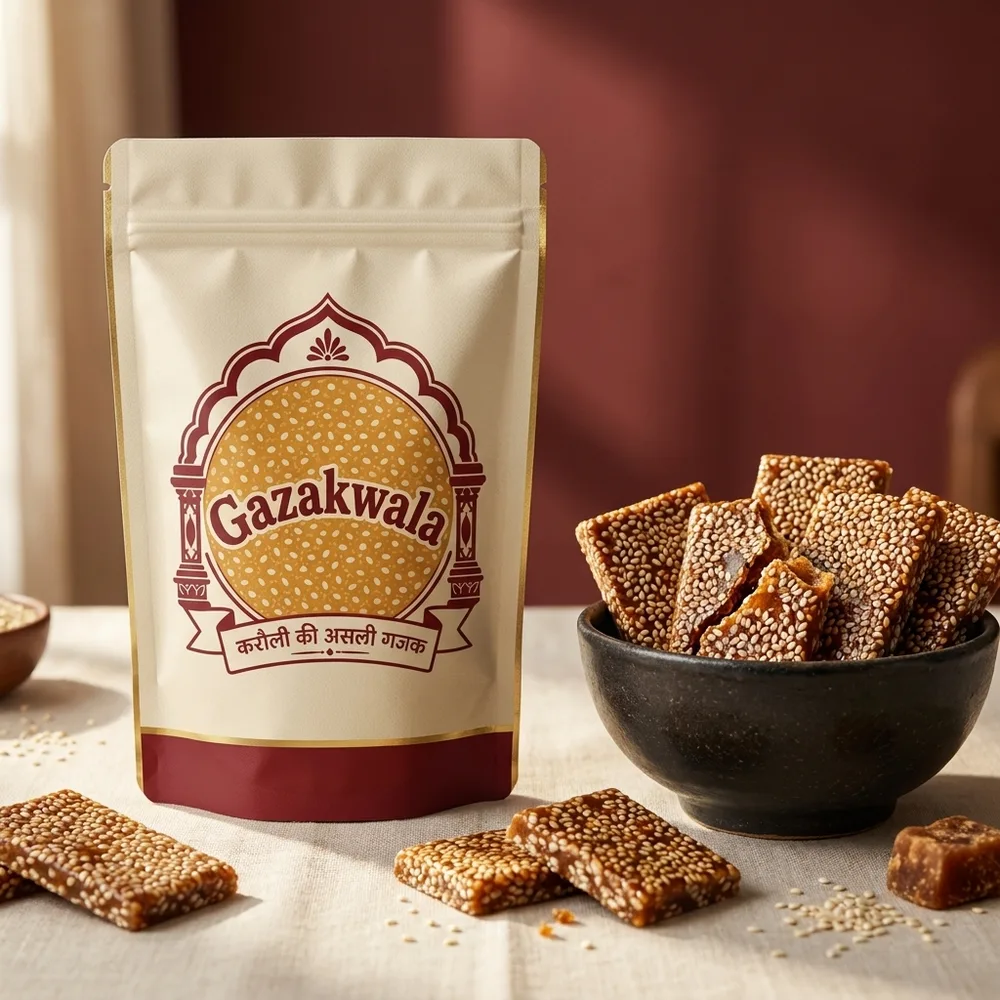
Til Chikki
तिल चिक्की
Also called: Sesame Chikki, Til Ki Chikki, Til Patti
Thin, glassy sesame brittle from the Karauli til belt — nutty, crisp and the winter favourite around Sankranti.
Read the Til Chikki guide →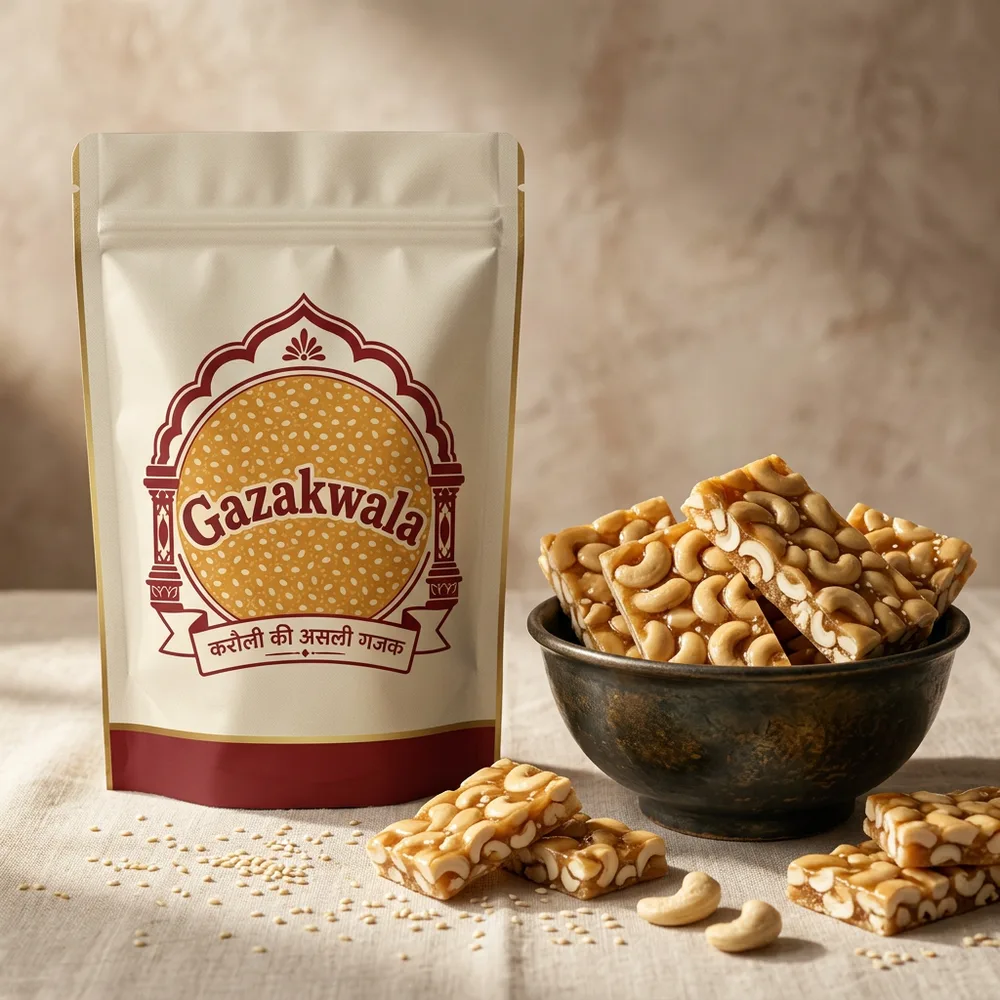
Kaju Chikki
काजू चिक्की
Also called: Cashew Chikki, Kaju Patti
Whole cashews folded late into hard-crack jaggery so they stay buttery and crunchy inside a clean-snapping slab.
Read the Kaju Chikki guide →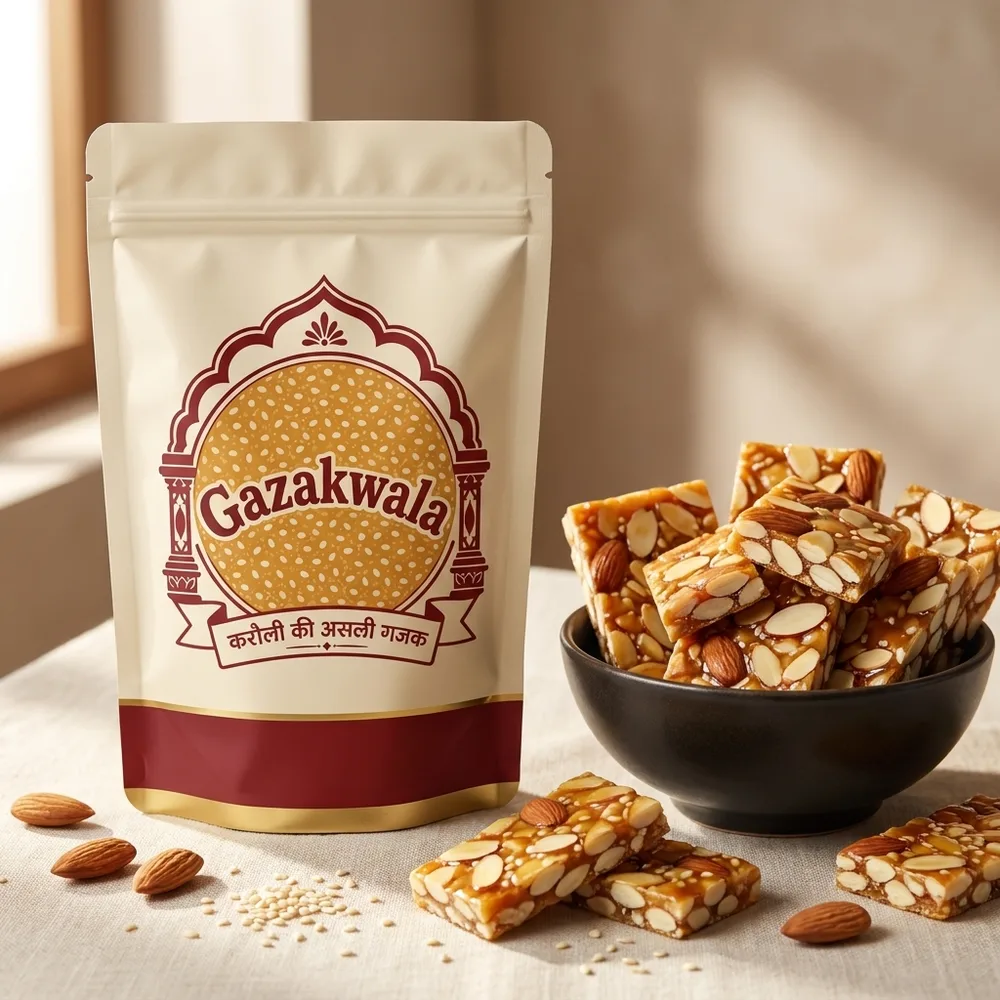
Badam Chikki
बादाम चिक्की
Also called: Almond Chikki, Badam Patti
Slivered almonds spread evenly through pale golden jaggery — a firmer bite and a deep roasted-almond aroma.
Read the Badam Chikki guide →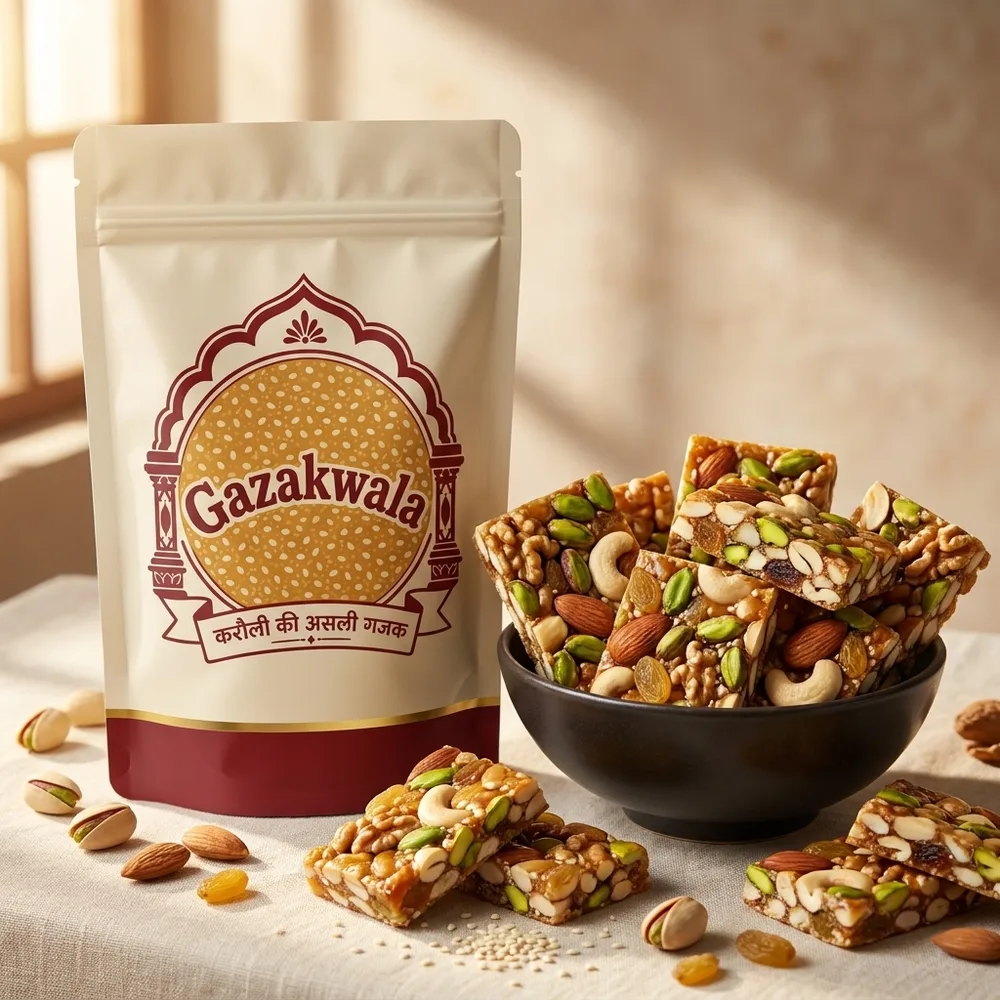
Dry Fruit Chikki
ड्राई फ्रूट चिक्की
Also called: Mixed Dry Fruit Chikki, Mewa Chikki
Pistachio, cashew, almond and raisin layered through jaggery so every bar carries the full mewa mix.
Read the Dry Fruit Chikki guide →Other Chikki Varieties
- Gud Chikki — Plain jaggery brittle with no nuts — the simplest, most old-fashioned form.
- Rajgira Chikki — Puffed amaranth set in jaggery, eaten during vrat and Navratri fasting.
- Coconut Chikki — Dry desiccated coconut folded into syrup for a chewy-crisp bite.
- Chocolate Chikki — Cocoa-coated or cocoa-blended chikki, popular with children.
- Malai Chikki — Milk-solids enriched brittle with a softer, creamier crumb.
- Mawa Chikki — Khoya worked into the jaggery for a richer, mithai-like slab.
- Millet Chikki — Bajra, ragi or jowar puffs — a modern high-fibre take on chikki.
- Peanut Butter Chikki — Ground peanut paste layered in, giving a fudgier centre.
- Rose Chikki — Finished with gulkand or rose for a fragrant, festive flavour.
- Butter Chikki — A touch of ghee or butter for a softer snap and glossier finish.
Chikki Benefits
Chikki set in pure jaggery carries the iron and trace minerals that refined sugar loses in processing — one reason gur has stayed in Indian winter kitchens for centuries. The nuts and seeds do the rest of the work: groundnuts and til bring plant protein and healthy fats, along with the slow-burning energy that made chikki a travel food long before packaged snacks existed.
Traditionally made chikki contains no maida, no glucose syrup and no preservatives — just two or three ingredients you can name. Its density is the point: a small piece goes a long way, which makes it practical for cold mornings, long journeys, tiffin boxes and school snack tins. Compared with most packaged energy bars, it is a whole food with a much shorter ingredient list.
This is general food information, not dietary or medical advice — anyone managing blood sugar or a specific health condition should speak to a qualified professional, because chikki is calorie-dense and jaggery is still a sugar.
Chikki Calories — Typical Values
| Type | Main ingredient | Approx. calories per 100 g |
|---|---|---|
| Peanut Chikki | Roasted groundnuts + jaggery | ~450–480 kcal/100g |
| Til Chikki | White sesame + jaggery | ~470–500 kcal/100g |
| Kaju Chikki | Whole cashews + jaggery | ~470–500 kcal/100g |
| Badam Chikki | Sliced almonds + jaggery | ~480–520 kcal/100g |
| Dry Fruit Chikki | Pistachio, cashew, almond, raisin + jaggery | ~470–510 kcal/100g |
| Gud Chikki | Plain jaggery, no nuts | ~380–400 kcal/100g |
These are typical indicative ranges for traditionally made chikki and are provided for general guidance. Actual values vary with recipe, jaggery grade and nut ratio — always check the nutrition panel on the pack you buy.
How Chikki Is Made
- 1. Roast the nuts or seeds. Groundnuts, til, cashews or almonds are dry-roasted in small lots, then rubbed between cloth so the loose skins come away — skins left in turn the finished chikki bitter.
- 2. Melt the jaggery to hard-crack stage. The gur is melted slowly and cooked to the point where a drop set in cold water snaps instead of bending. This single step decides whether the chikki shatters cleanly or turns chewy.
- 3. Fold in the nuts off the heat. The roasted nuts go in away from the flame and are worked in fast, because the syrup begins to set within moments.
- 4. Pour and roll thin. The mass is tipped onto a greased marble or stone slab and rolled out with a wooden rolling pin to an even thickness.
- 5. Score, cut and cool. Bars are scored and cut while the sheet is still warm, then cooled completely before packing so no steam is trapped inside.
Traditional makers use no glucose syrup, no palm oil and no preservatives — the crispness comes entirely from temperature control.
Chikki, Gajak and Tilpatti — What's the Difference?
Chikki keeps the nuts whole and visible in a single set layer — you can see every peanut or cashew suspended in the jaggery.
Gajak is repeatedly hand-hammered and folded so the til breaks down into thin crisp layers, while tilpatti is rolled paper-thin into discs. For the full breakdown, read the full comparison of gajak, chikki, tilpatti and revdi.
Buy Chikki Online from Karauli
Gazakwala makes chikki in the sesame belt near Karauli, Rajasthan, in small winter batches — pure jaggery, no palm oil, no preservatives — under FSSAI Lic. No. 12224038000012, and ships pan-India.
Assorted chikki and gazak gift boxes are made to order for Sankranti, Lohri and Diwali, and we handle bulk and corporate orders with custom packing. You can also browse our twelve gazak varieties alongside the chikki range.
Order Chikki on WhatsAppRead more about chikki
- Peanut Chikki Recipe: The Shengdana Chikki That Actually Snaps
- Chikki Calories and Nutrition: A Straight Breakdown by Type
- Millet Chikki and Peanut Butter Chikki: The Modern Take on an Old Bar
- Rajgira Chikki: The Vrat Chikki for Navratri and Fasting Days
- What Chikki Should Cost: A Price and Buying Guide
Frequently Asked Questions
What is chikki called in English?+
Usually jaggery brittle or nut brittle; peanut brittle is the closest equivalent, though chikki is traditionally set in gur rather than refined sugar.
Which chikki is the healthiest?+
Til and peanut chikki made with pure jaggery are the most nutrient-dense of the everyday varieties; rajgira and millet chikki suit those wanting more fibre. All chikki is calorie-dense and best eaten in small portions.
Is chikki good for weight loss?+
Chikki is energy-dense, so it works better as a controlled-portion snack replacing processed sweets than as a weight-loss food. General information only, not dietary advice.
How long does chikki stay fresh?+
Properly made chikki keeps 3 to 6 months in an airtight container away from humidity. Moisture, not time, is what turns it soft.
Why does my chikki turn sticky?+
The jaggery syrup did not reach hard-crack stage, or the chikki absorbed moisture from the air. Always cool it fully before sealing.
Is chikki gluten free?+
Traditional chikki made only of nuts or seeds and jaggery contains no wheat, but check the pack if you have coeliac disease, as shared facilities vary.
What is the difference between chikki and gajak?+
Chikki keeps nuts whole in one set layer; gajak is hand-hammered and folded into many thin crisp layers.