
Chikki Guide
Kaju Chikki — Cashew Chikki, Benefits, Calories & Where to Buy
काजू चिक्की
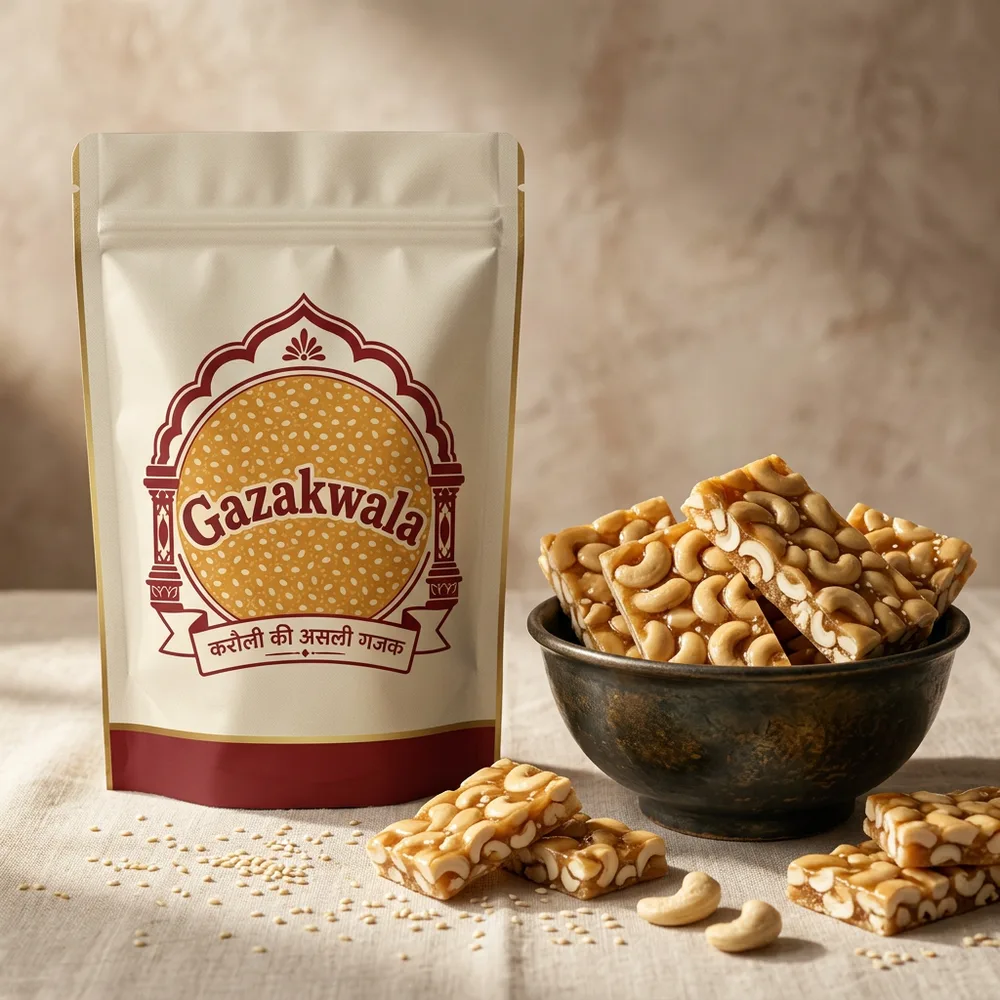
Whole cashews folded late into hard-crack jaggery so they stay buttery and crunchy inside a clean-snapping slab.
What Is Kaju Chikki?
Kaju chikki — also sold as cashew chikki or kaju patti — is the premium end of the chikki family: whole cashew kernels suspended in hard-set jaggery, cut thicker than til chikki so the nut stays the centre of attention.
It is the variety most often chosen for gifting rather than everyday snacking, and the one where the quality of the nut, not the syrup, decides whether the slab is worth buying.
How Kaju Chikki Is Made
The cashews are lightly roasted only until the ivory colour warms — deep roasting makes them brittle and they then break up in the syrup. They go in whole and late, after the jaggery is off the flame, so they never sit in heat long enough to soften.
The sheet is rolled thicker than the seed varieties and cut into neat rectangles so each piece carries several whole kernels in cross-section.
Taste and Texture
Buttery and mild — the cashew rounds off the jaggery instead of competing with it, so kaju chikki tastes noticeably less sharp than til or peanut. The contrast is the appeal: a hard, clean snap from the slab, then a soft creamy crunch from the nut.
Benefits of Kaju Chikki
Cashews contribute healthy monounsaturated fats, magnesium and plant protein, and the jaggery base keeps the minerals refined sugar strips away. As a gifting sweet it also avoids the milk solids and khoya of most mithai, so it keeps for months without a fridge.
This is general food information, not dietary or medical advice — anyone managing blood sugar or a specific health condition should speak to a qualified professional, because chikki is calorie-dense and jaggery is still a sugar.
Calories in Kaju Chikki
Kaju chikki works out at approximately ~470–500 kcal/100g. Because pieces are cut thicker, a single bar is heavier than a til chikki piece — worth keeping in mind when serving.
These are typical indicative ranges for traditionally made chikki and are provided for general guidance. Actual values vary with recipe, jaggery grade and nut ratio — always check the nutrition panel on the pack you buy.
How to Store
Airtight and cool. Cashews absorb moisture faster than sesame, and a humid tin turns the nut chewy long before the jaggery softens — so avoid the fridge, which condenses moisture onto the surface every time you open it.
Buy Kaju Chikki Online
Our kaju chikki is made to order in winter batches near Karauli, Rajasthan with whole cashews, pure jaggery and no palm oil, under FSSAI Lic. No. 12224038000012. Message us for gift-box combinations or corporate quantities.
Order Kaju Chikki on WhatsAppKaju Chikki — Frequently Asked Questions
Why is kaju chikki more expensive than peanut chikki?+
The cost is almost entirely the cashews. Whole kaju is several times the price of groundnut, and a good slab is packed with them rather than padded with syrup.
Are the cashews whole or broken in kaju chikki?+
We use whole kernels and halves so the cross-section shows the nut clearly. Very fine cashew bits sink and turn soft, which loses the point of the variety.
How many calories are in kaju chikki?+
Around 470–500 kcal per 100 g, depending on how densely the cashews are packed.
Is kaju chikki suitable for gifting?+
It is the most gifted variety we make, along with dry fruit chikki — it looks generous in a box and keeps for months without refrigeration.
Related Chikki Varieties
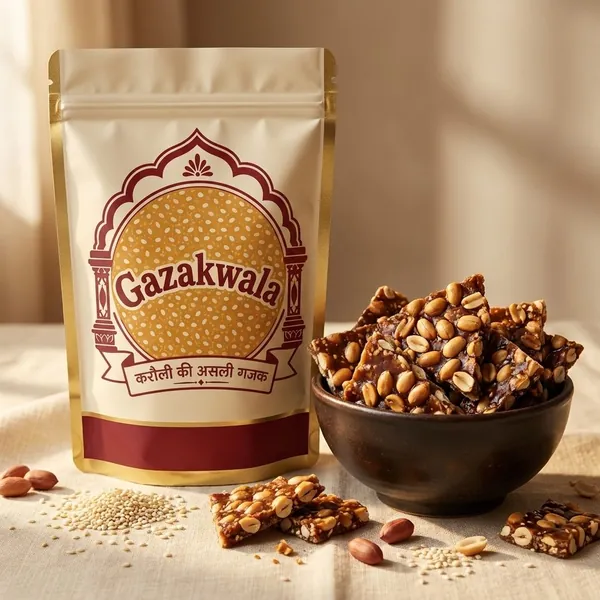 Peanut Chikkiमूंगफली चिक्की
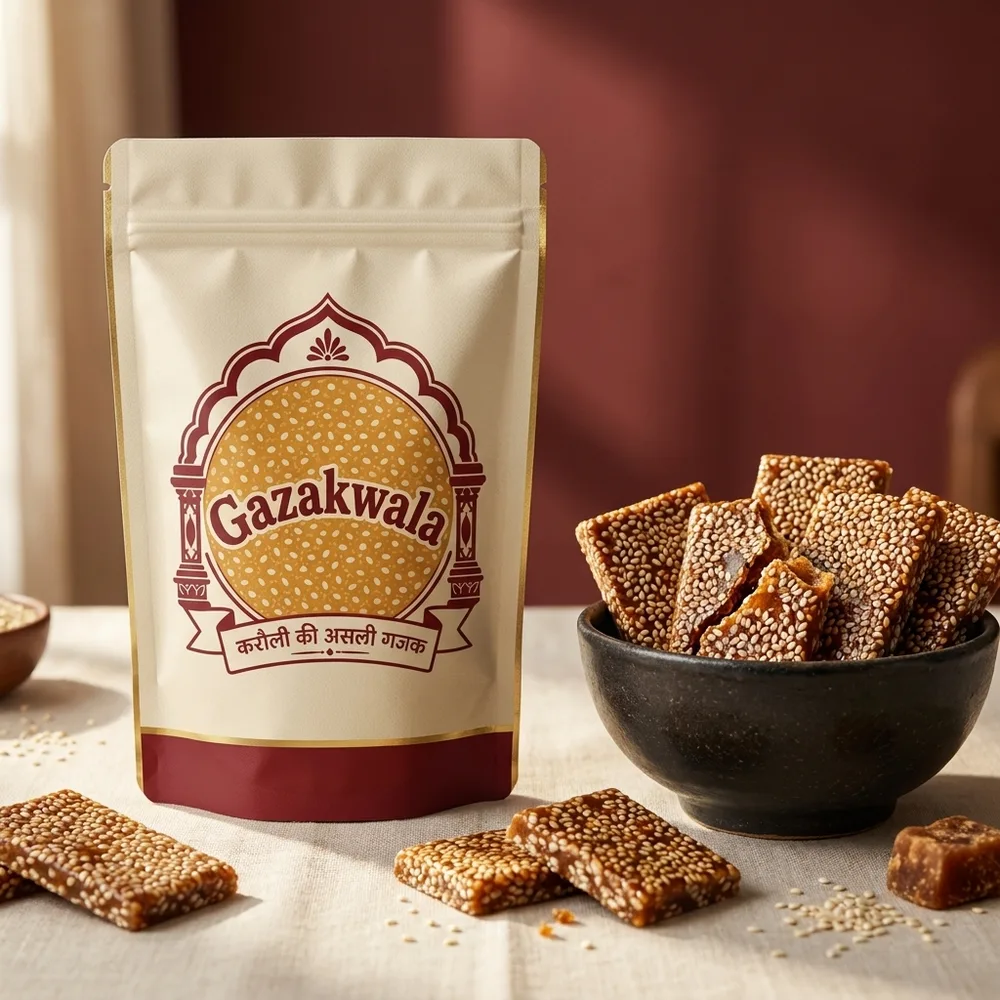 Til Chikkiतिल चिक्की
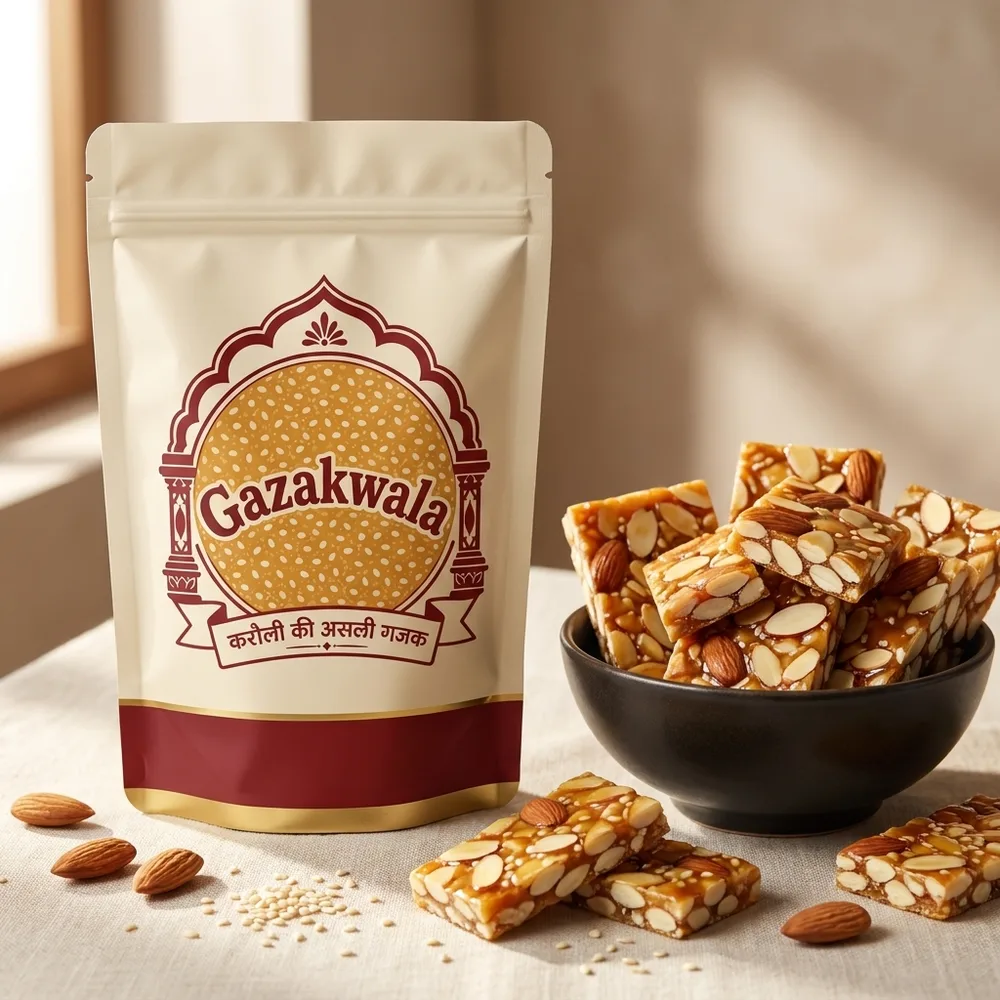 Badam Chikkiबादाम चिक्की
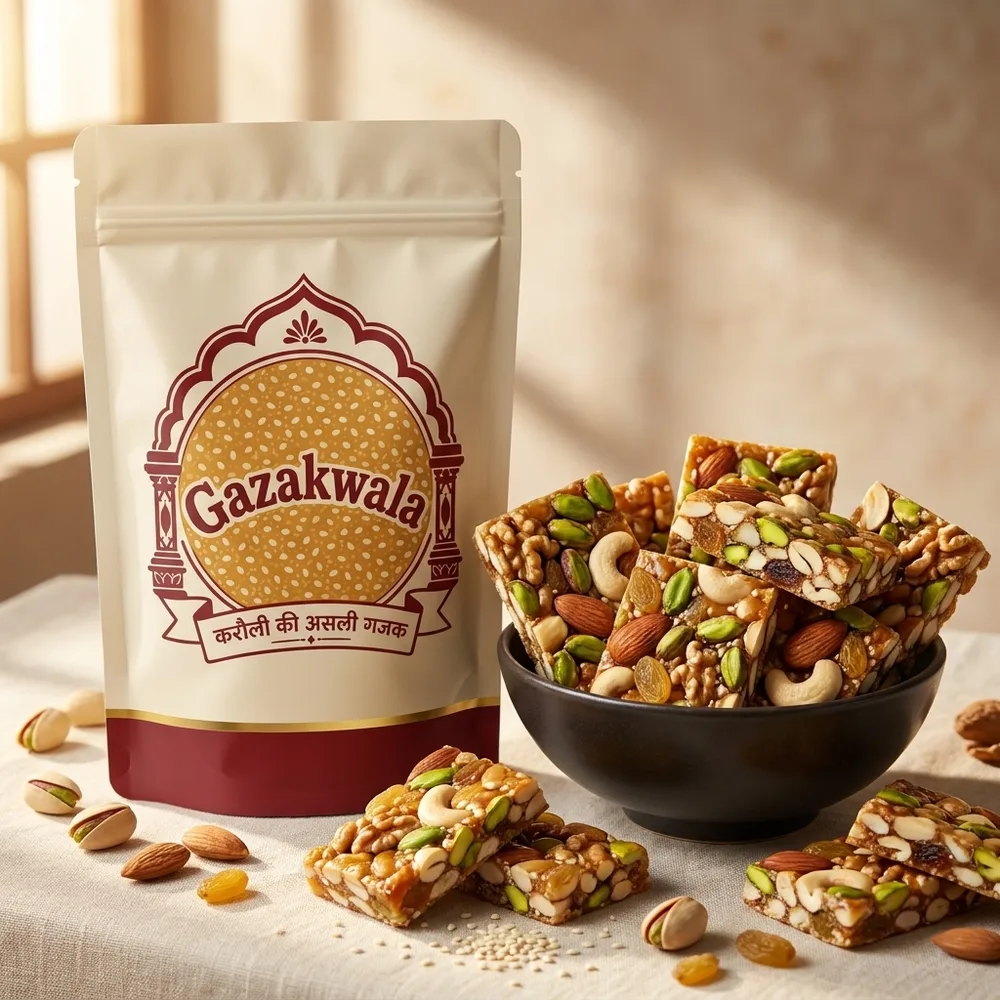 Dry Fruit Chikkiड्राई फ्रूट चिक्की
Back to the full guide: Chikki — types, benefits and calories.