
Chikki Guide
Til Chikki — Sesame Chikki, Benefits, Calories & Where to Buy
तिल चिक्की
Thin, glassy sesame brittle from the Karauli til belt — nutty, crisp and the winter favourite around Sankranti.
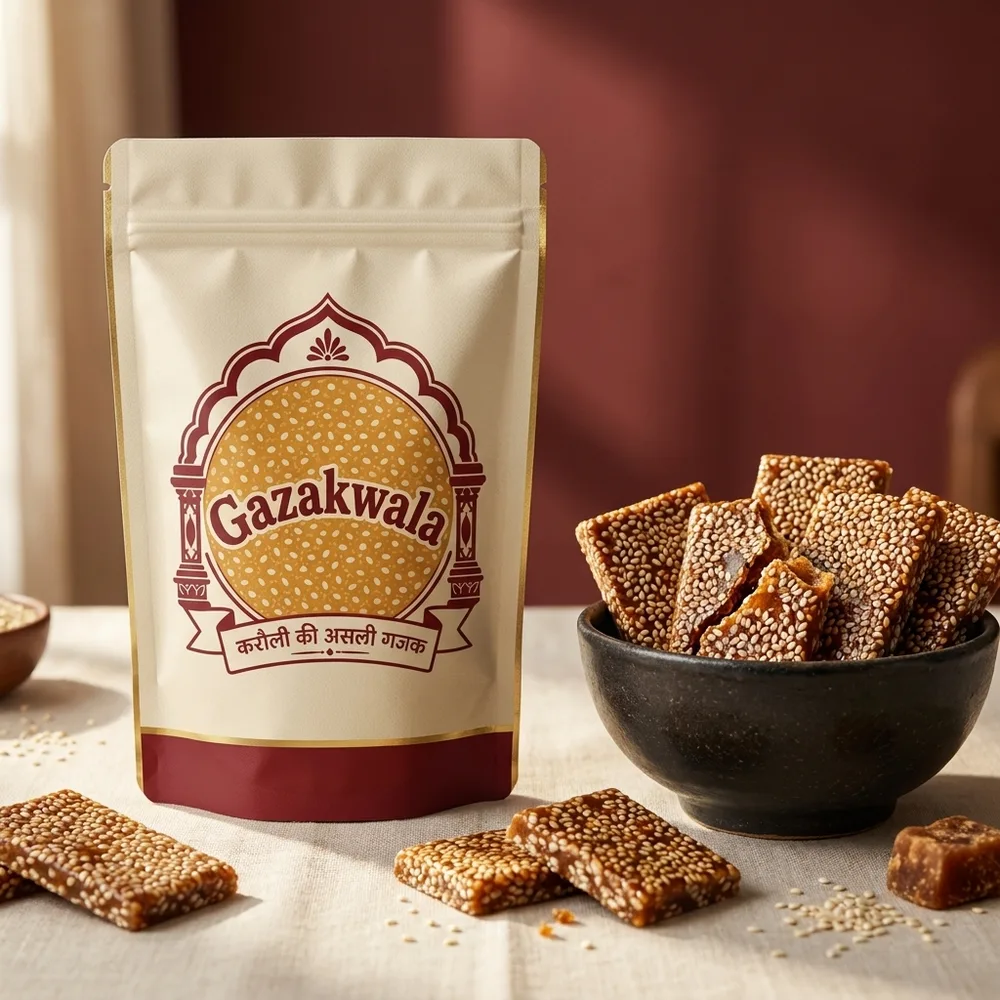
What Is Til Chikki?
Til chikki — searched just as often as sesame chikki, til ki chikki or til patti — is white sesame set into jaggery and rolled thin enough to see light through the edges. It is the variety closest to Karauli's own tradition, because this is sesame country.
Where peanut chikki is a year-round snack, til chikki is tied to the cold months and to Makar Sankranti and Lohri, when til and gur are exchanged as the winter pairing.
How Til Chikki Is Made
The sesame is dry-roasted on a low flame and pulled off the moment the seeds just start to pop and turn fragrant — a few seconds longer and the whole batch goes bitter, since there is no skin or shell to protect the seed.
The gur is taken to hard-crack stage, the warm til is stirred through, and the sheet is rolled much thinner than peanut chikki so it snaps like glass instead of crunching.
Taste and Texture
Toasted, faintly grassy sesame over clean caramel, finishing dry rather than sticky. The thinness gives a sharp, brittle snap and it dissolves quickly — the lightest-eating chikki in the range, which is why people finish far more of it than they intend to.
Benefits of Til Chikki
Sesame is one of the denser seed sources of calcium, iron and healthy fats in Indian cooking, and pairing it with jaggery is the oldest winter combination in the subcontinent. Ours is set in pure gur with nothing else added — no palm oil, no glucose syrup, no preservatives.
This is general food information, not dietary or medical advice — anyone managing blood sugar or a specific health condition should speak to a qualified professional, because chikki is calorie-dense and jaggery is still a sugar.
Calories in Til Chikki
Til chikki sits at roughly ~470–500 kcal/100g. Because it is rolled thin, a typical piece weighs less than a peanut chikki bar, so portions are naturally smaller.
These are typical indicative ranges for traditionally made chikki and are provided for general guidance. Actual values vary with recipe, jaggery grade and nut ratio — always check the nutrition panel on the pack you buy.
How to Store
Sesame oil turns stale faster than groundnut oil, so til chikki is best eaten within 3 to 4 months. Airtight glass or steel, no humidity, and away from strong-smelling spices. If it loses its snap, the tin has been letting moisture in.
Buy Til Chikki Online
Our til chikki is made from white sesame grown in the Karauli belt and set in pure jaggery, in small winter batches, under FSSAI Lic. No. 12224038000012. Message us for pack sizes, Sankranti gift boxes or bulk despatch anywhere in India.
Order Til Chikki on WhatsAppTil Chikki — Frequently Asked Questions
Is til chikki the same as til patti?+
They overlap. Til chikki is a thicker set bar, while til patti and tilpatti are rolled much thinner into sheets or discs. Both are sesame in jaggery.
Why is til chikki eaten at Makar Sankranti?+
Til and gur are the traditional Sankranti pairing across most of India, exchanged in January as winter food. Til chikki is the easiest form to make, gift and carry.
Should til chikki use white or black sesame?+
We use white sesame from the Karauli belt for a cleaner, nuttier flavour and a paler, glassier finish. Black sesame gives a stronger, more bitter note.
How many calories are in til chikki?+
About 470–500 kcal per 100 g, since sesame is high in oil. A thin 15 g piece is roughly 70–75 kcal.
Related Chikki Varieties
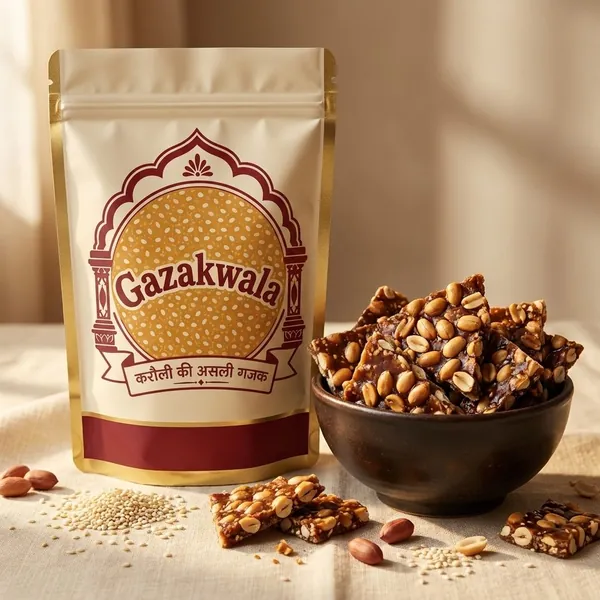 Peanut Chikkiमूंगफली चिक्की
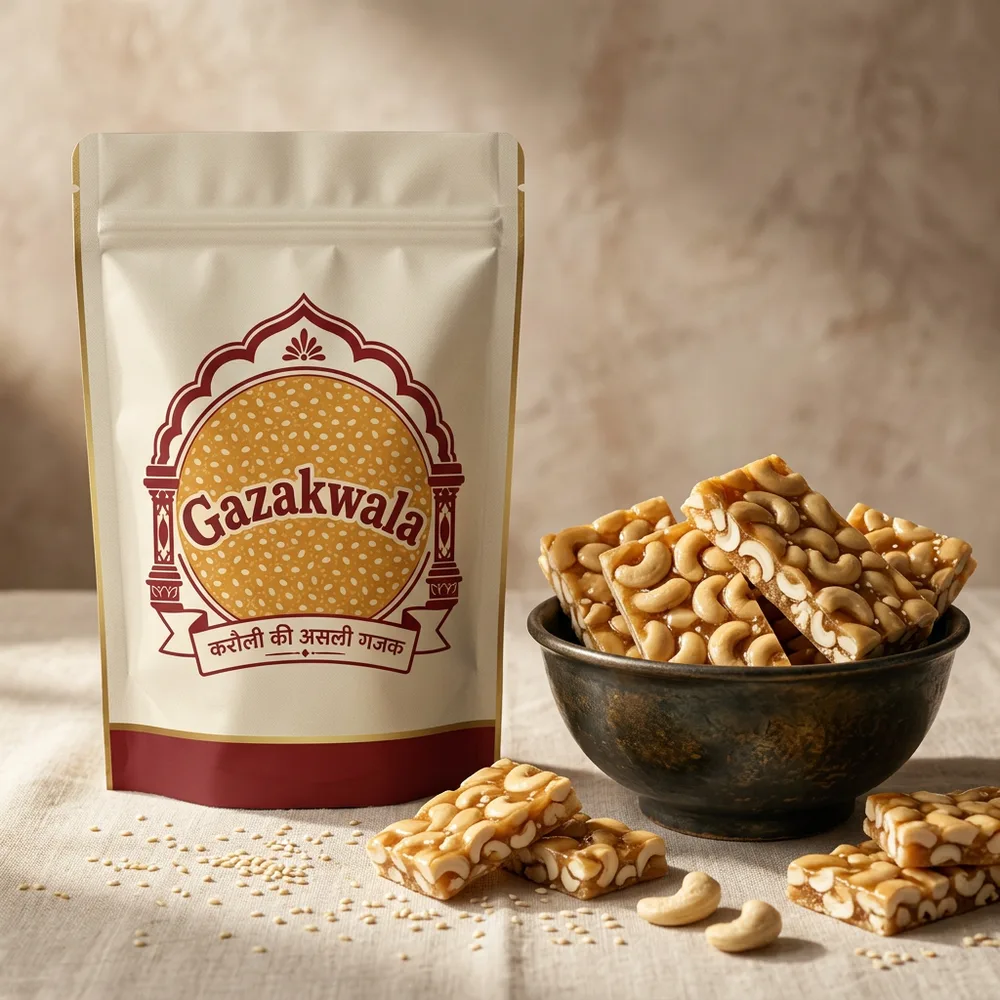 Kaju Chikkiकाजू चिक्की
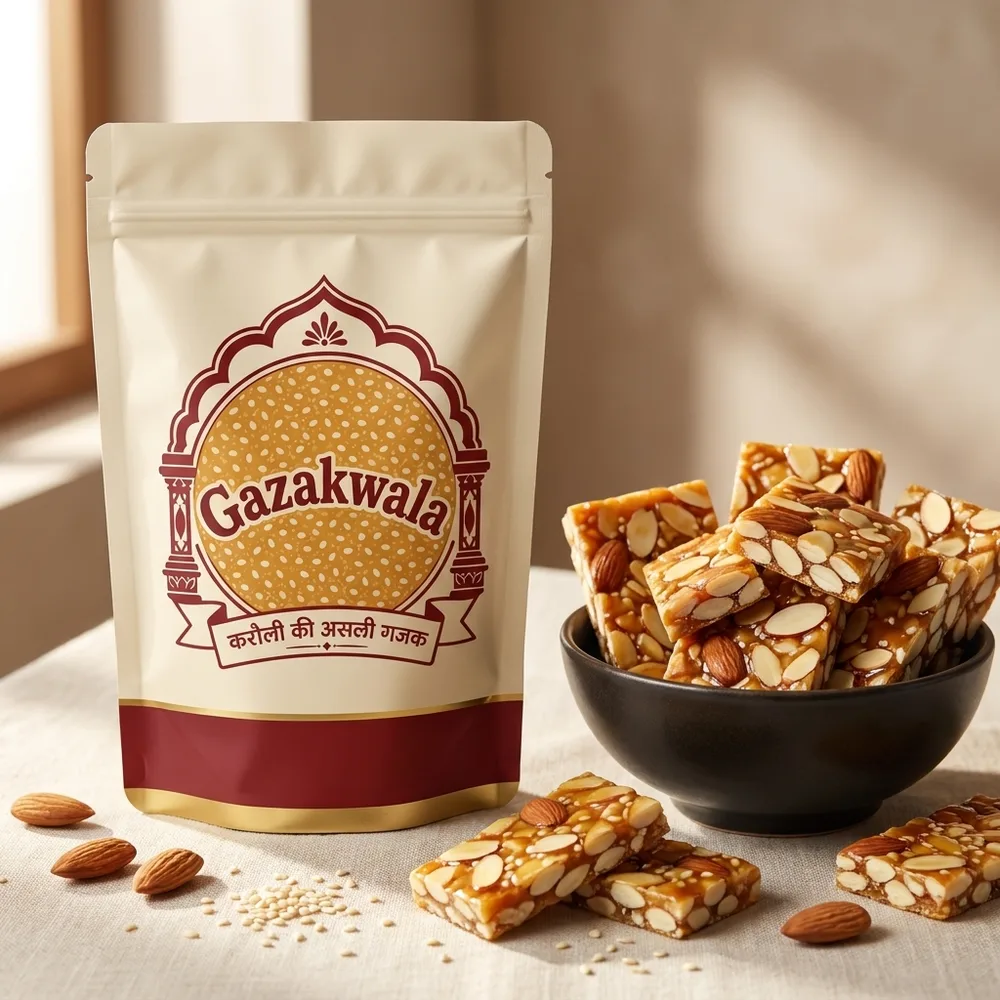 Badam Chikkiबादाम चिक्की
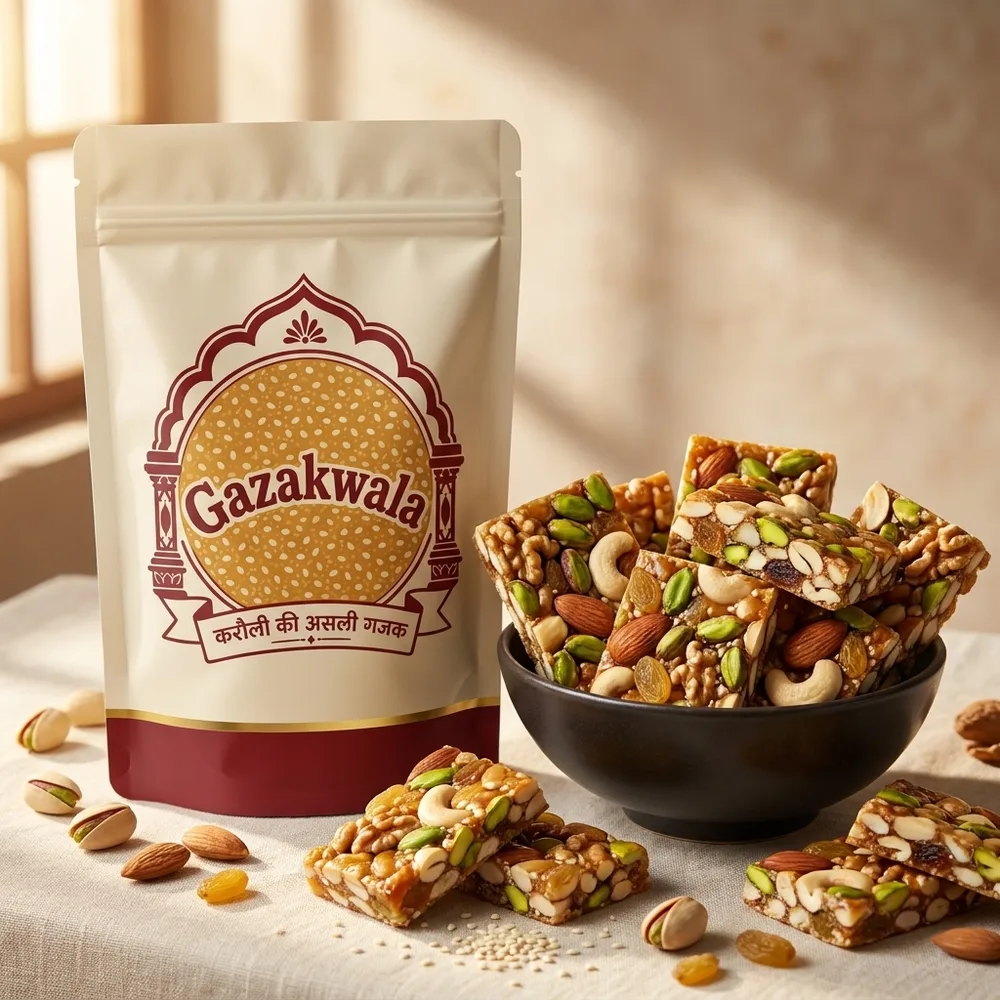 Dry Fruit Chikkiड्राई फ्रूट चिक्की
Back to the full guide: Chikki — types, benefits and calories.